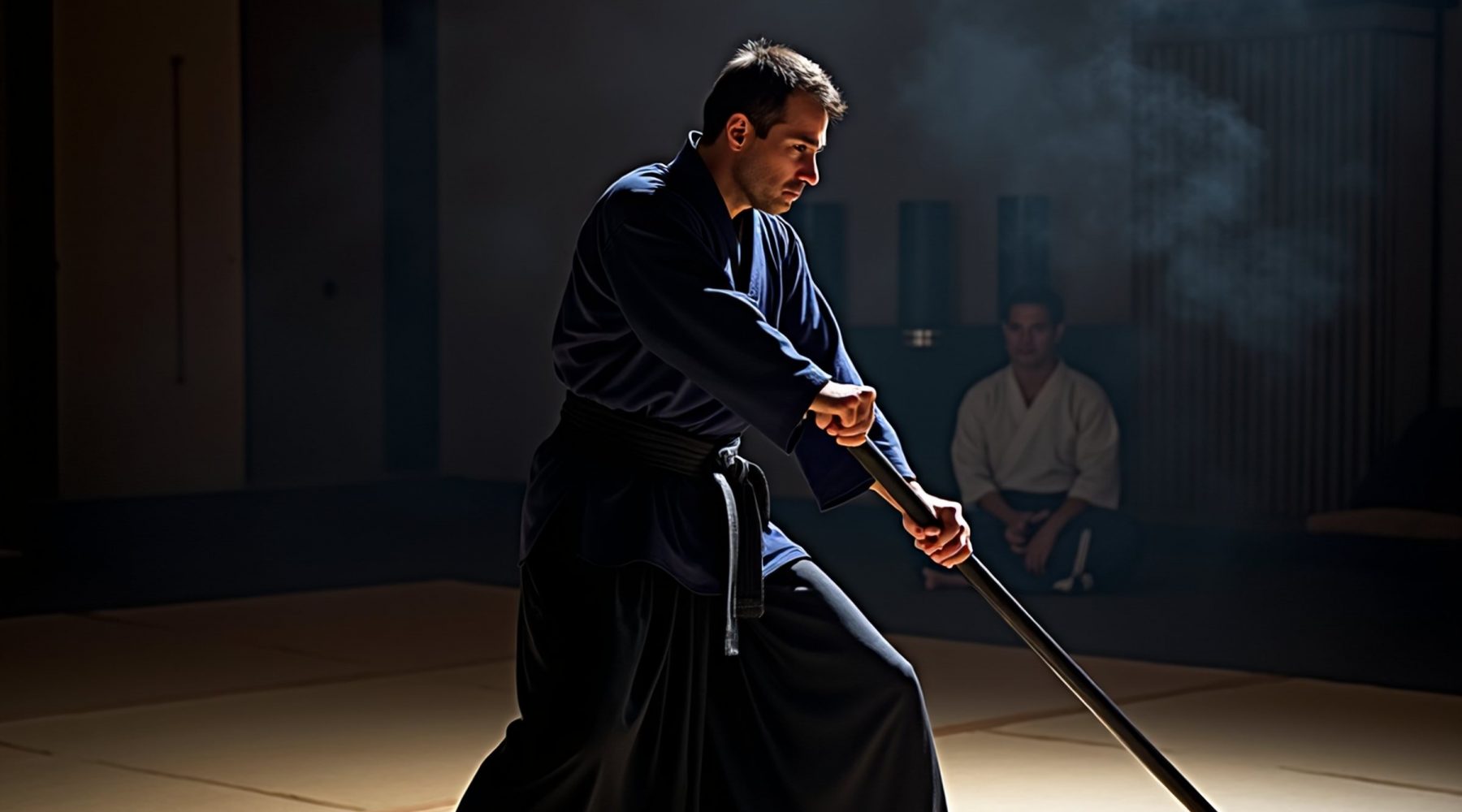
Traditional Okinawan Weaponry
Bo, jo, sai, tonfa, nunchaku, kama and the sword
Okinawan Kobudo is the weapons half of the tradition that produced karate, and it is trained alongside the empty-hand syllabus rather than instead of it.
The Okinawan weapons are famously improvised. The bo is a carrying pole, the kama a sickle, the tonfa a millstone handle. When weapons were restricted on Okinawa, what was left was whatever an ordinary working person could plausibly be holding.
What makes Kobudo worth training is not the novelty. The body mechanics are the same mechanics as the empty-hand art — the same hip rotation, the same stances, the same principles of distance and timing — but a weapon is unforgiving about sloppiness in a way that a bare hand is not. Students almost always find their karate improves once they have spent a while with a bo in their hands.
WYSOK teaches the bo, jo, sai, tonfa, nunchaku and kama, along with Iai Jutsu — the drawing and cutting of the sword. Each weapon has its own syllabus and its own grades, so a student can take one of them a long way on its own. Kobu Jutsu sits alongside them as a combined syllabus, graded across the weapons as a single system, and plenty of people hold grades in both.
Weapons training is normally opened up once a student has a reasonable grounding in the empty-hand syllabus, and runs partly through club sessions and partly through association courses.
What you learn
- Kobu Jutsu — the combined weapons syllabus, graded as one system
- Bo Jutsu — the six-foot staff, where many people begin their weapons journey
- Jo Jutsu — the shorter four-foot staff, quicker and closer than the bo
- Sai Jutsu — the three-pronged truncheon, trained as a pair
- Tonfa Jutsu — the side-handled baton, from the handle of a millstone
- Nunchaku Jutsu — the linked flail
- Kama Jutsu — the sickle, for more advanced students
- Iai Jutsu — drawing and cutting with the sword
- Weapons kata, and paired drills against both armed and empty-hand attacks
Who it suits
Graded students who already have a foundation in karate and want to deepen it. If you enjoy kata and the technical, precise side of training, Kobudo is usually the part people become quietly obsessed with. Not a starting point — come to the empty-hand classes first.
Grading & belts
Each weapon carries its own syllabus and its own grades, and Kobu Jutsu grades across the weapons as a combined system. Students take whichever route suits them, and many hold grades in both — Sensei Shane Walker holds 4th Dan in Kobu Jutsu, and Sensei Matthew Barlow 5th Dan in Kobu Jutsu alongside 4th Dan in Bo Jutsu. Weapons courses run periodically across the association and are open to dan grades and senior kyu grades — watch the news page for dates.
Add Traditional Okinawan Weaponry to your training
It is taught through courses run across the association and is open to graded WYSOK students. Course and grading dates go up on the news page. If you are not training with us yet, a club is the place to start.