Ju Jitsu
Close-quarters self-defence — throws, locks and control
Where karate works at striking distance, Ju Jitsu takes over when someone is already too close. It is the older Japanese art from which both judo and aikido were later developed.
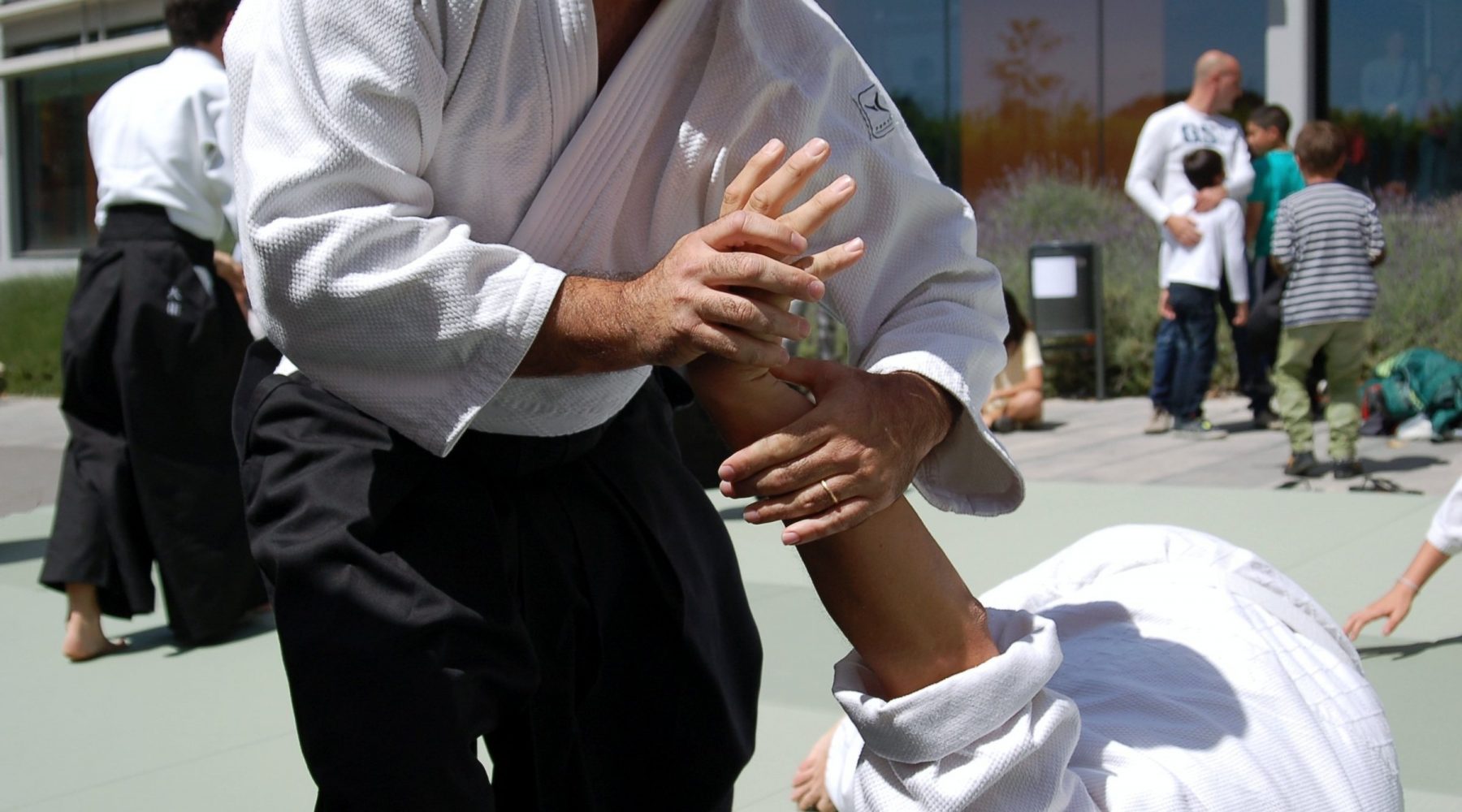
Ju Jitsu is built for the situation nobody chooses: someone has already grabbed you, and distance is gone. The answer is not to punch your way out but to use the attacker's own balance and structure against them — throws, joint locks, chokes and controls, with strikes used to create the opening rather than to finish the job.
It is the most directly practical thing WYSOK teaches. There is no sport ruleset shaping what gets trained, so the syllabus covers wrist grabs, lapel grabs, bear hugs, defence from the ground and defence against more than one person. That practicality is also why our adult class runs separately from the juniors — some of what adults train is not appropriate for children.
The junior programme covers the same principles at a suitable intensity: breakfalling first and always, then throws, holds and escapes, with an emphasis on getting away safely rather than on winning a fight.
What you learn
- Ukemi — breakfalling, so you can be thrown safely. This comes first, always
- Nage waza — throws and takedowns using balance rather than strength
- Kansetsu waza — joint locks and controls
- Shime waza — strangles and chokes (adults only)
- Atemi — strikes used to create an opening
- Ne waza — groundwork and escapes
- Practical defence against grabs, holds and multiple attackers
Who it suits
Adults who want self-defence that works at contact range, and anyone who has done a striking art and wants to fill in the gap that opens up when an opponent closes the distance. The junior class suits children who like the physical, tumbling side of training. It rewards persistence more than athleticism.
Grading & belts
Ju Jitsu runs its own kyu and dan grading structure, separate from the karate syllabus — a grade in one art does not carry across to the other. Plenty of our students grade in both. Sensei Shane Walker holds 6th Dan in Ju Jitsu.
Your first session
Come in a T-shirt and jogging bottoms with a bottle of water — no suit, no equipment, nothing to buy. Your first session is free, you pay per session after that, and there is never a contract. Pick the club nearest you below and message the instructor directly.
3 clubs teaching Ju Jitsu


Try Ju Jitsu for free
Find your nearest club, message the instructor directly, and turn up. That is the whole process.